
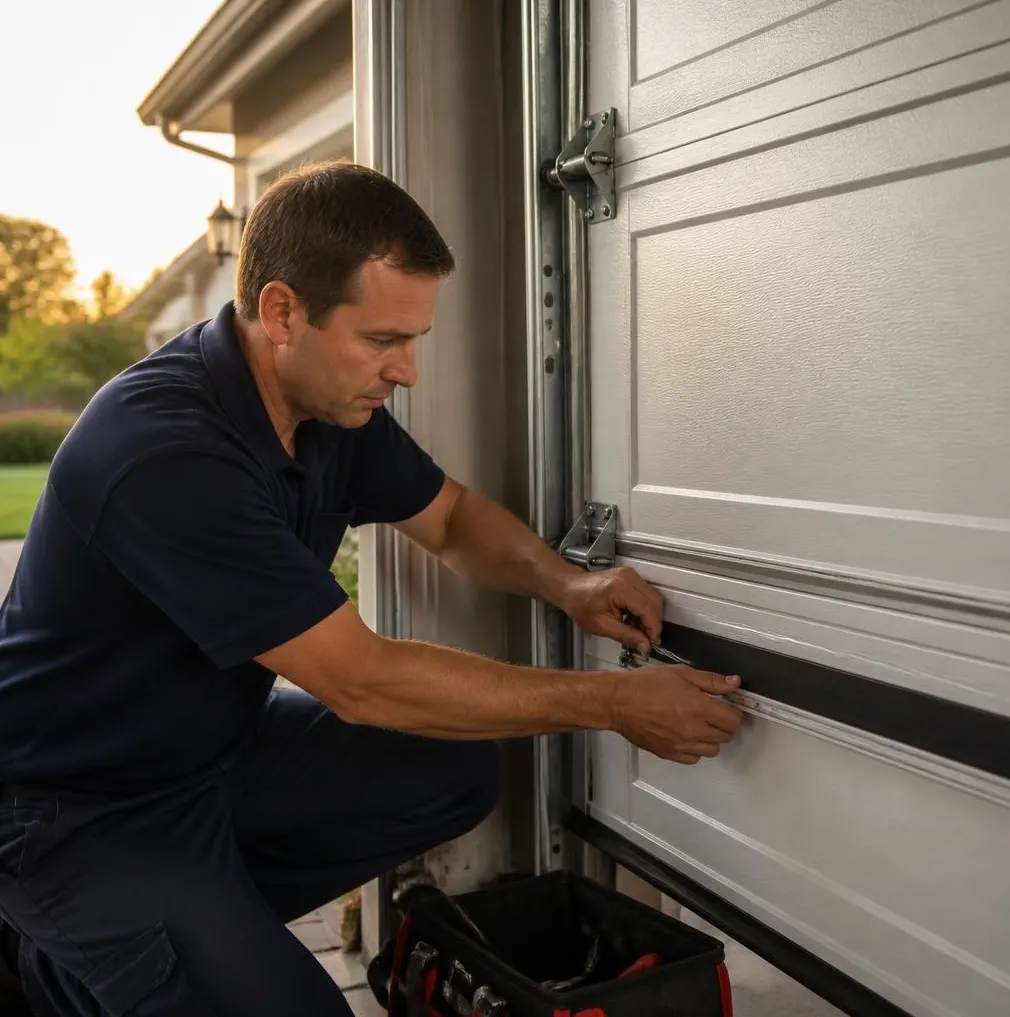
What a Technician Sees on These Calls
Once the first cold fronts roll through Central Florida, the service calls in Davenport change character. A homeowner calls because the door suddenly groans or jerks on its way up, something it never did in July. Another calls because the photo-eye sensors are throwing errors for no obvious reason. A third just wants someone to look at a panel that got dinged during a September storm and has been bothering them ever since. None of these are winter problems in the way a northern tech would mean it, but they're all tied to the shift that happens here between hurricane season and the drier, cooler months that follow.
Why Florida's Mild Winter Still Stresses a Garage Door
Davenport doesn't get snow or ice, but the door assembly still reacts to the season. Nighttime temperatures that drop into the 40s or even 30s during a cold snap cause metal springs, rollers, and tracks to contract slightly. Lubricant that was fine in the summer heat can thicken just enough to make an opener work harder, which shows up as new noise or a door that hesitates partway through its cycle. At the same time, the humidity that saturated everything all summer starts to drop, which dries out rubber weatherstripping and can leave it cracked or pulling away from the frame right as it needs to seal out the season's cooler, sometimes gusty, fronts.
There's also the leftover business from hurricane season. Minor wind pressure, flying debris, or a hard rain event earlier in the fall can leave a track slightly out of alignment or a panel with a dent that wasn't urgent enough to call about at the time. Those small issues tend to get worse, not better, once temperatures swing and metal keeps expanding and contracting.
A Practical Winter Readiness Checklist
1. Test the Balance
Disconnect the opener by pulling the release cord, then lift the door by hand halfway. A properly balanced door will stay in place on its own. If it drifts down or slams up, the spring tension has shifted, which is common after months of heat and humidity followed by cooler, drier weather. This isn't a DIY spring adjustment job; it's a sign to get the springs checked before they fail completely, often without warning.
2. Inspect and Replace Weatherstripping
Run a hand along the bottom seal and side weatherstripping. If it's brittle, cracked, or pulling loose from UV exposure over the summer, replace it now. A good seal keeps out wind-driven rain during winter cold fronts and keeps conditioned air from leaking out of an attached garage.
3. Lubricate Moving Parts the Right Way
Use a silicone-based garage door lubricant, not household oil or WD-40, on hinges, rollers, and the track. Household oils attract dust and grime, which turns into grit that wears down rollers faster. Cooler mornings are a good reminder to do this, since thickened old lubricant is often what causes that new scraping or grinding sound homeowners report in late fall.
4. Check for Rust, Especially Near Hardware
Areas closer to the coast deal with salt air that accelerates rust on hinges, tracks, and springs. Even away from the coast, the humidity swings in Central Florida create condensation on metal hardware. Look for orange flaking at bolts, hinges, and the bottom of the track where moisture collects, and address it before it spreads to moving parts.
5. Test the Photo-Eye Sensors
Wipe down the small sensor lenses near the bottom of the tracks. Pollen, dust, and spiderwebs accumulate over the warmer months, and a dirty or slightly misaligned sensor is one of the most common reasons a door reverses unexpectedly or refuses to close. This is a five-minute check that solves a surprising number of service calls.
6. Look Over Panels and Tracks for Storm Damage
Walk the outside of the door in daylight and look for dents, warping, or a track that's pulled slightly away from the wall. Minor damage from hurricane season's wind and debris doesn't always announce itself right away, but it tends to worsen as temperatures cycle through the cooler months.
7. Confirm the Opener's Battery Backup
If the opener has a battery backup, test it now. Cold fronts sometimes bring brief power outages along with wind and rain, and a working backup battery means the door still operates and locks properly even if the power blinks out overnight.
When to Call Precision Garage Door of Davenport
Some of this is simple homeowner maintenance. But if the balance test shows the door drifting, if there's visible rust on the springs or hardware, or if a panel took damage during the fall storms, it's time to call in a technician rather than push through it. Precision Garage Door of Davenport handles Garage Door Spring Repair for doors that are out of balance or showing wear from the heat-to-cool cycle, as well as Garage Door Maintenance & Tune-Up service that covers lubrication, hardware inspection, track alignment, and sensor checks in one visit. Catching these issues now, before the door is in daily use through the holidays and into next year's heat and hurricane season, is far less disruptive than dealing with a spring failure or a stuck door later.
If your garage door has been acting differently since the weather turned, or you just want it checked over before the season gets busier, call Precision Garage Door of Davenport, serving Davenport, Haines City, Kissimmee, Clermont, Winter Haven, Poinciana, Champions Gate, and Four Corners. A quick visit now can save a much bigger headache later.