
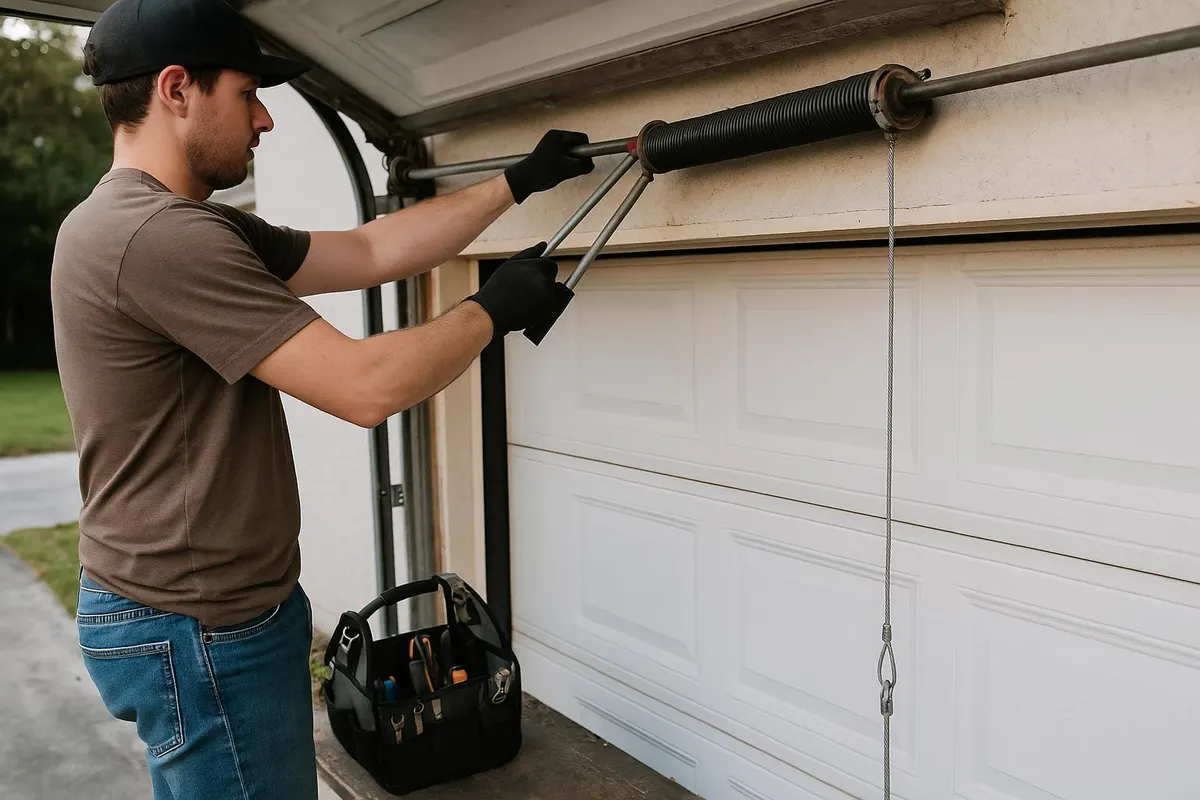
What a Technician Sees on This Call
It usually comes up during an estimate for a new door or a panel swap. One spouse wants the insulated option because "it'll keep the garage cooler." The other doesn't want to pay the difference because "it's just a garage." Meanwhile the door in question is a single-layer steel panel from the builder, with daylight visible around the weatherstripping and a faint rust line forming at the bottom where humidity has been sitting against the steel for a few summers. Neither spouse is entirely wrong — the answer depends on what that garage is actually used for.
What R-Value Actually Measures
R-value is a measurement of how well a material resists heat flow. The higher the number, the slower heat moves through it. On a garage door, that number comes from the type and thickness of insulation sandwiched between the steel skins — usually polystyrene (cheaper, rigid foam board) or polyurethane (injected foam that bonds to the steel and fills the panel more completely, giving a higher R-value per inch).
A non-insulated single-layer steel door has almost no R-value. It's just a sheet of metal that heats up fast in direct sun and transfers that heat straight into the garage. A double-layer door adds a layer of polystyrene between two steel skins. A triple-layer door adds a layer of steel or vinyl on the inside too, sandwiching polyurethane foam — this is the construction that gets the highest R-values on the market.
Who Actually Benefits
In this climate, insulation earns its keep in a few specific situations:
- Attached garages that share a wall with living space. If the garage backs up to a bedroom, laundry room, or runs AC ductwork through it, a hot garage pushes heat into the house and makes the HVAC work harder.
- Garages used as a gym, workshop, office, or hobby space. If anyone spends real time out there, the difference between a 95-degree garage and an insulated one that stays closer to ambient temperature is noticeable within minutes.
- Doors that take direct afternoon sun. A south- or west-facing door absorbs a lot of heat on a Florida afternoon. Insulation slows how fast that heat transfers inward.
- Garages with sensitive equipment. Freezers, extra refrigerators, power tools, and even some garage door openers don't love sitting in extreme heat day after day. Insulation moderates the swings.
- Anyone bothered by noise. Insulated panels are stiffer and deaden sound — rain hammering on the roof of the garage, wind during a storm, or the door itself operating. This isn't about R-value directly, but it rides along with the same construction.
Who's Paying for Nothing
On the other side, insulation doesn't do much for:
- Detached garages used purely for storage. If nobody's standing in there and nothing inside cares about temperature swings, the R-value is irrelevant.
- Garages with no AC and no shared wall with conditioned space. If the garage is going to be hot regardless because there's no climate control to protect, insulation slows the heat gain but the garage still ends up hot by afternoon.
- Vented garages with the door open most of the day. Air exchange matters more than the door's R-value if the door is rarely closed.
In these cases, the extra cost for insulation is mostly buying noise reduction and dent resistance, not real energy savings. That's a legitimate reason to buy it — just be honest about which benefit you're paying for.
The Part Nobody Argues About: Strength and Moisture
Here's where insulation pays off regardless of how the garage is used. Double- and triple-layer doors are physically stronger than single-layer steel, which matters for wind-load performance during hurricane season — a door that's rated to resist higher wind pressure is less likely to fail during a storm, and a failed garage door is one of the most common ways roofs get compromised in high wind. Insulated steel also resists the dents, oil-canning, and moisture-related swelling that single-layer steel or older wood doors develop in this humidity. A door that traps less moisture against the steel also rusts slower at the bottom panel, which is usually the first place it shows up here.
When to Call Precision Garage Door of Davenport
If you're replacing a door and trying to settle this exact argument, that's a conversation worth having with a technician in person rather than guessing from a brochure. During a New Garage Door Installation, we'll walk through how the garage is actually used, which direction it faces, and whether it's tied into conditioned space before recommending an R-value that makes sense — instead of upselling insulation nobody needs. If your current door already has insulation but it's underperforming, it's often the weatherstripping and seals, not the panel, that are letting heat and moisture in; a Garage Door Maintenance & Tune-Up can diagnose that before you spend money on a new door. And if storm damage has you replacing a single panel, we'll flag when matching insulation levels matters versus when it won't.
If you're in Davenport, Haines City, Kissimmee, Clermont, Winter Haven, Poinciana, Champions Gate, or Four Corners and want a straight answer on whether insulation is worth it for your specific garage, call Precision Garage Door of Davenport for an on-site look and an honest recommendation.